Audiobooks vs Podcasts vs Courses: Which Is Better for Learning?
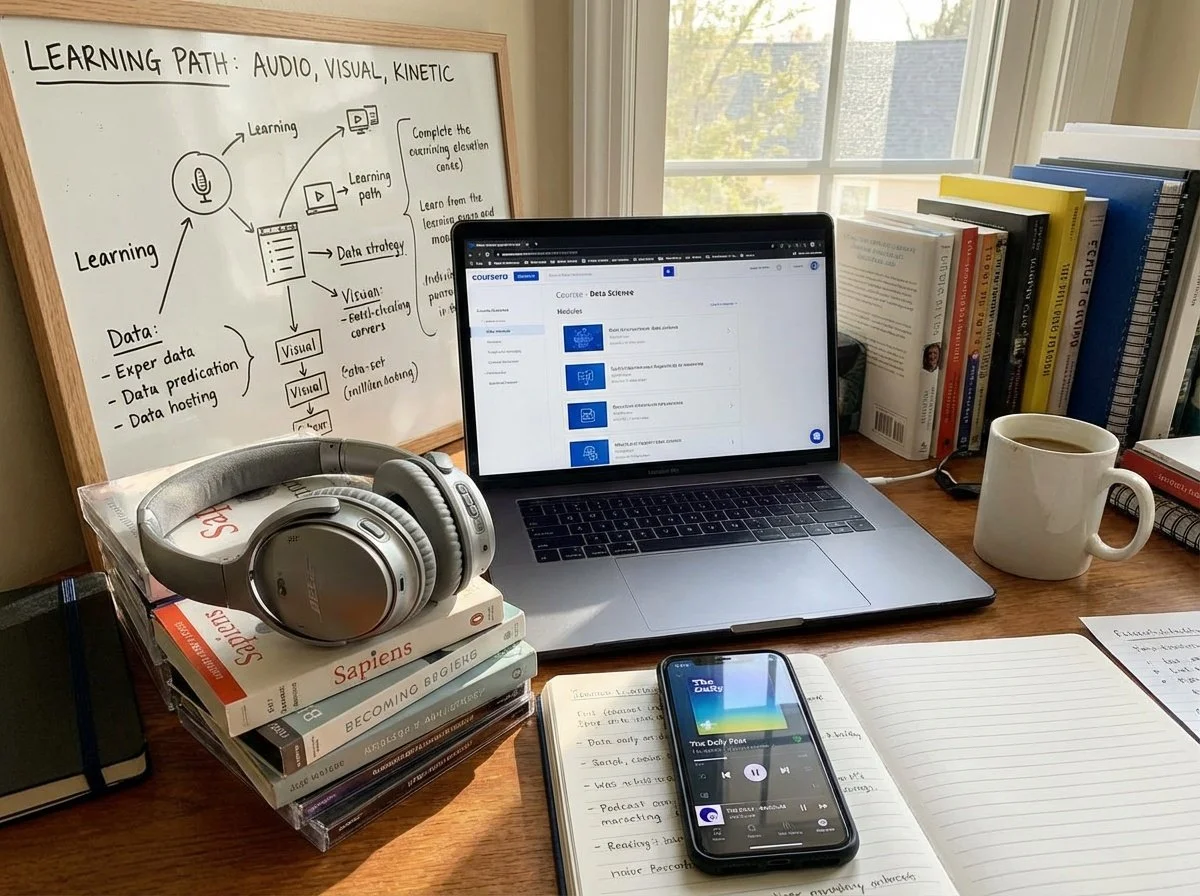
Do Podcasts Provide a Better Way to Learn Than Books or Courses?
If you’ve found yourself debating whether to listen to an audiobook, subscribe to a podcast, or enroll in a course, it’s not indecision—it’s simply navigating a vast sea of choices online. This page explores whether podcasts provide a better way to learn than books or courses, and helps you decide which format suits your needs.
All three formats can support learning and personal growth. They just do it in very different ways, and choosing the “best” one has less to do with motivation and energy level, with how your brain actually works.
For many people, auditory learning is a natural and effective way to absorb information, making podcasts and similar audio formats especially engaging.
Let’s break it down without pretending there’s a universal answer.

Whether you're a student, professional, or lifelong learner, understanding the strengths and weaknesses of podcasts, books, and courses can help you make informed choices and maximize your learning. Choosing the right format can improve learning outcomes and make your educational journey more effective and enjoyable.
Benefits of Audio Learning
Active Listening Skills
Audio learning has become a powerful teaching tool in today’s classrooms, offering a fresh way to support and engage students beyond traditional classroom materials. Educational podcasts, in particular, are making it easier than ever for teachers to encourage students to develop active listening skills—an essential part of effective communication and comprehension. When students listen to podcast episodes, they’re not just absorbing facts; they’re practicing how to focus, interpret, and respond to information in real time.
Personal Stories and Real-World Experiences
One of the standout benefits of audio learning is its ability to bring personal stories and real-world experiences directly into the learning process. Hearing native speakers share their perspectives or recount personal journeys helps students connect with the material on a deeper level, making lessons more engaging and memorable. This exposure to natural speech patterns and authentic conversation also supports language development and helps students build vocabulary in context.
Flexibility and On-Demand Access
Flexibility is another major advantage. With audio content available on mobile devices, students can explore new ideas and topics at their own pace—whether during class time, on the bus, or at home. This on-demand access means learning doesn’t have to stop when the school bell rings; students can revisit material, catch up on missed lessons, or dive deeper into subjects that spark their curiosity.
Critical Thinking Development
Audio learning also plays a key role in developing critical thinking skills. By listening to a range of viewpoints and ideas through educational podcasts, students are encouraged to analyze, question, and reflect on what they hear. This active engagement with content helps them become more thoughtful learners and better prepares them to participate in meaningful discussions.
Supporting Diverse Learning Styles
Ultimately, integrating audio learning into the classroom empowers teachers to create a more dynamic and supportive learning environment. It complements traditional teaching methods, caters to different learning styles, and helps students build the skills they need to succeed—not just in school, but in the world beyond. By harnessing the power of audio, educators can make the learning process more accessible, engaging, and effective for everyone.
Audiobooks: Structured, Deep, and Auditory Learning
Audiobooks tend to work well for people who want:
A cohesive, start-to-finish framework
Depth without needing to stare at a screen
Flexibility to listen while doing other things
Time to reflect without feeling rushed
Because audiobooks are usually adapted from full books, they are audio recordings of written texts. This means they often offer more nuance and context than shorter formats. Listening to an audiobook provides a different experience from reading a traditional book, as it allows multitasking and a more passive form of engagement, whereas reading requires active focus and direct interaction with the text. Many listeners appreciate that they can pause, rewind, or take breaks without losing the thread.
An audiobook is a word-for-word audio recording of a written book.
That said, audiobooks are still one-way learning — there’s no interaction or feedback built in. Podcasts provide a more natural format for human learning compared to audiobooks.
Educational Podcasts: Accessible, Conversational, and Varied
Podcasts are often the most approachable option. Each podcast episode can serve as a unique learning opportunity. They’re:
Easy to sample
Free or low-cost
Great for exposure to new ideas and perspectives
Podcasts frequently use story to make information more memorable, weaving narratives that help listeners connect with the material. They shine when you want:
Conversation rather than curriculum
Multiple viewpoints
Something lighter or more informal
Podcasts can encourage listeners to become active participants by engaging in discussions or sharing insights, rather than being passive listeners. They often provide answers to complex questions or showcase different viewpoints, making learning more interactive and fun. Podcasts are used frequently by learners and educators to supplement their studies, increase student engagement, and make learning more enjoyable. Students can even create their own podcasts, developing skills and taking ownership of their learning. Revision podcasts are also popular for reviewing material and exam preparation. Listening to podcasts provides practice in listening, speaking, or interviewing skills, and helps learners with words, pronunciation, and language comprehension. The engaging nature of podcasts helps listeners retain information by keeping them interested and involved.
The downside is structure. Podcasts rarely present ideas in a linear manner, and quality can vary widely depending on the host, guests, and the show's goals.
For many people, podcasts work best as supplemental learning, not a primary educational tool.
Courses: Guided, Interactive, and Commitment-Based
Courses tend to be the most structured option, designed to provide clear and organized learning experiences for students. They’re often helpful for people who:
Want a clear learning path
Benefit from assignments or prompts
Like accountability or progression
Courses can feel supportive — but they also require:
Time
Attention
Emotional bandwidth
Courses often require participation or completion of assignments at a specific time, which can add pressure for those with busy schedules. When someone is already overwhelmed or burned out, even a really fun course can feel like one more thing to keep up with.
Summary: Comparing Podcasts, Books, and Courses for Learning Effectiveness
When it comes to learning effectiveness, each format—podcasts, books, and courses—offers unique strengths and limitations. Most research suggests that the most effective approach is often a blended learning strategy that integrates both methods. Books are generally more effective for complex or dense material because readers can control the pace and easily reread sections. Podcasts facilitate flexibility by turning "dead time" into productive learning periods, a benefit that books and seated courses cannot match. While podcasts allow for multitasking, passive listening can reduce focus and retention for complex information compared to focused reading. Current educational trends favor a blended learning model rather than choosing one method over another, with books for deep analysis and podcasts for summarizing key concepts. Ultimately, the best results often come from combining these formats to suit your learning goals, lifestyle, and the type of material you want to master.
Which Format Is “Best”?
The most effective learning format is usually the one that:
Feels accessible rather than intimidating
Matches your current energy level
Supports curiosity without pressure
Learners should consider which format they are most interested in, as higher interest can lead to greater engagement and better outcomes. The best format is the one that helps you understand and retain information most effectively. Each format—whether podcasts, books, or courses—can help expand your knowledge in different ways.
For some people, that’s audiobooks. For others, podcasts or courses. And for many, it’s a combination over time.
Learning doesn’t have to be optimized to be useful — it just has to be sustainable.
Final Thoughts
Audiobooks, podcasts, and courses aren’t competing for first place. I can see the allure in making it seem like one is better. They’re tools — and tools work best when they fit the job and the person using them.
Advances in technology and digital media are transforming education, making learning more accessible and adaptable to individual needs.
If you’re deciding where to start, it can help to ask:
Do I want depth or variety?
Structure or flexibility?
Reflection or interaction?
The answer may change over time — and that’s not a failure. It’s responsiveness.